Optimisation Strategy of Methanol Production Using Swarm Based Techniques
DOI:
https://doi.org/https://doi.org/10.37934/sej.15.1.2950Keywords:
Multi-Objective Optimisation (MOO)MethanolMultiobjective Particle Swarm Optimisation (MOPSO)Multiobjective Dragonfly Algorithm (MODA)Multi-objective Slime Mould Algorithm (MOSMA)Abstract
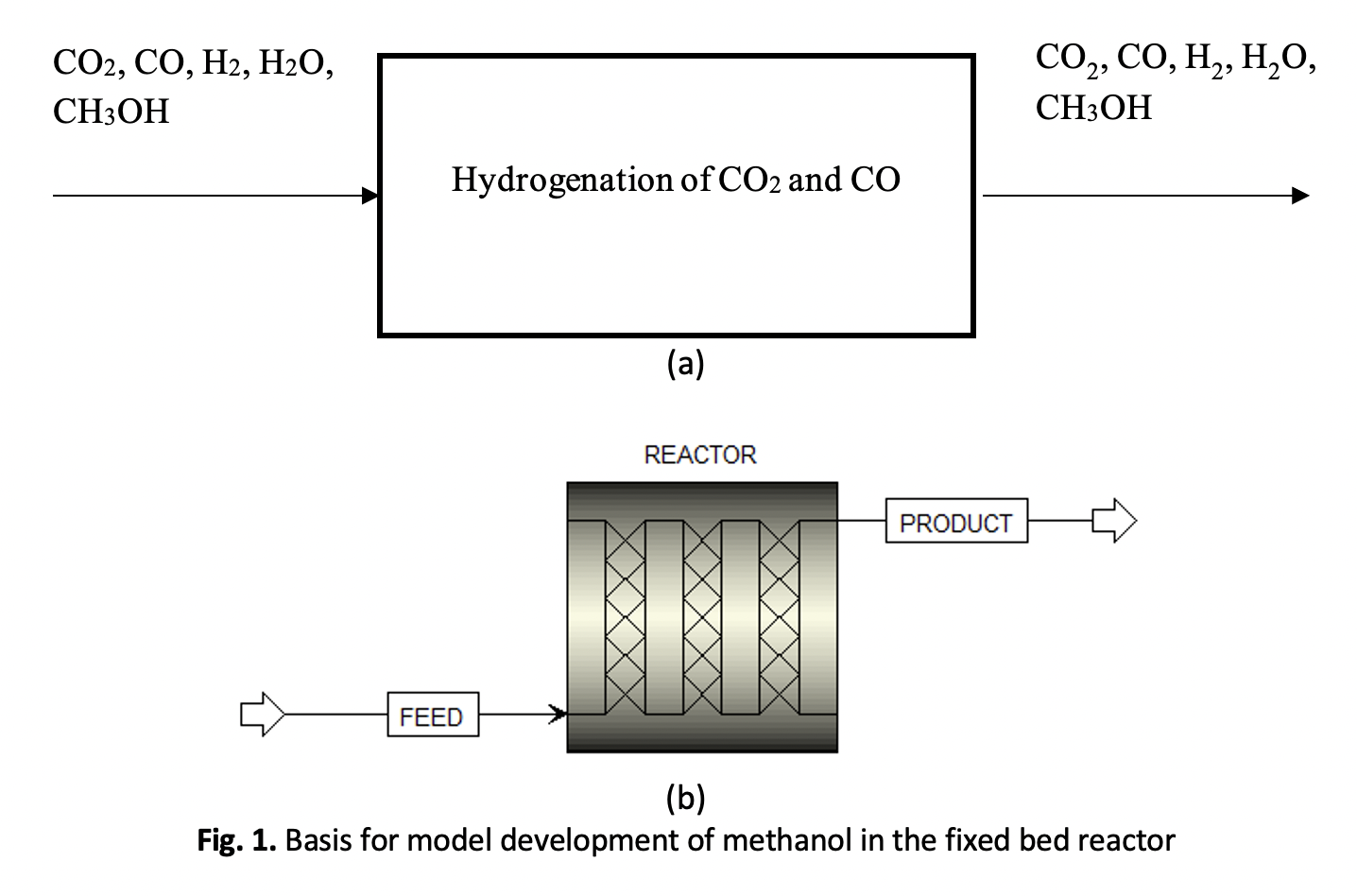
Swarm-based optimisation techniques were compared for tuning the operating parameters of a methanol production process, in a fixed-bed catalytic reactor was carried out by considering five objectives: maximising CO₂ conversion (XCO₂) and methanol production rate (FCH₃OH), while minimising bare module cost (CBM), energy cost (CostE), and side product formation (FH₂O). An Aspen Plus simulator was used for the model-based optimisation of the CH₃OH production process. Multi-objective swarm-based optimisation algorithms, namely Multi-objective Particle Swarm Optimisation (MOPSO), Multi-objective Dragonfly Algorithm (MODA) and Multi-objective Slime Mould Algorithm (MOSMA) were integrated with the Aspen simulation model to solve the optimisation problems. The optimisation methods were evaluated using hypervolume, pure diversity, and spacing performance metrics. Based on the results obtained, MOSMA showed better overall performance, with a solution set that demonstrated good convergence, diversity, and distribution along the Pareto Front (PF). Furthermore, the decision variable plots indicate that reactor pressure significantly influenced the optimal solution. The results obtained include a conversion of 0.567, a product rate of 2784.147 kmol/hr, an energy cost of 0.773 Mil. RM/year, a CBM of 0.054 Mil. RM, and a side product formation of 270.399 kmol/hr.